
History of Missed Connections
A person, a place, a moment, and the hope that the other one is reading. That is the whole form of a missed connection, and it has barely changed in three hundred years. What has changed, again and again, is where people post it.
The first "once seen" ads
The personal advertisement was born in London in the 1690s. On 19 July 1695, John Houghton's weekly A Collection for Improvement of Husbandry and Trade printed what historians consider England's first genuine lonely-hearts ad: a man seeking a wife.1
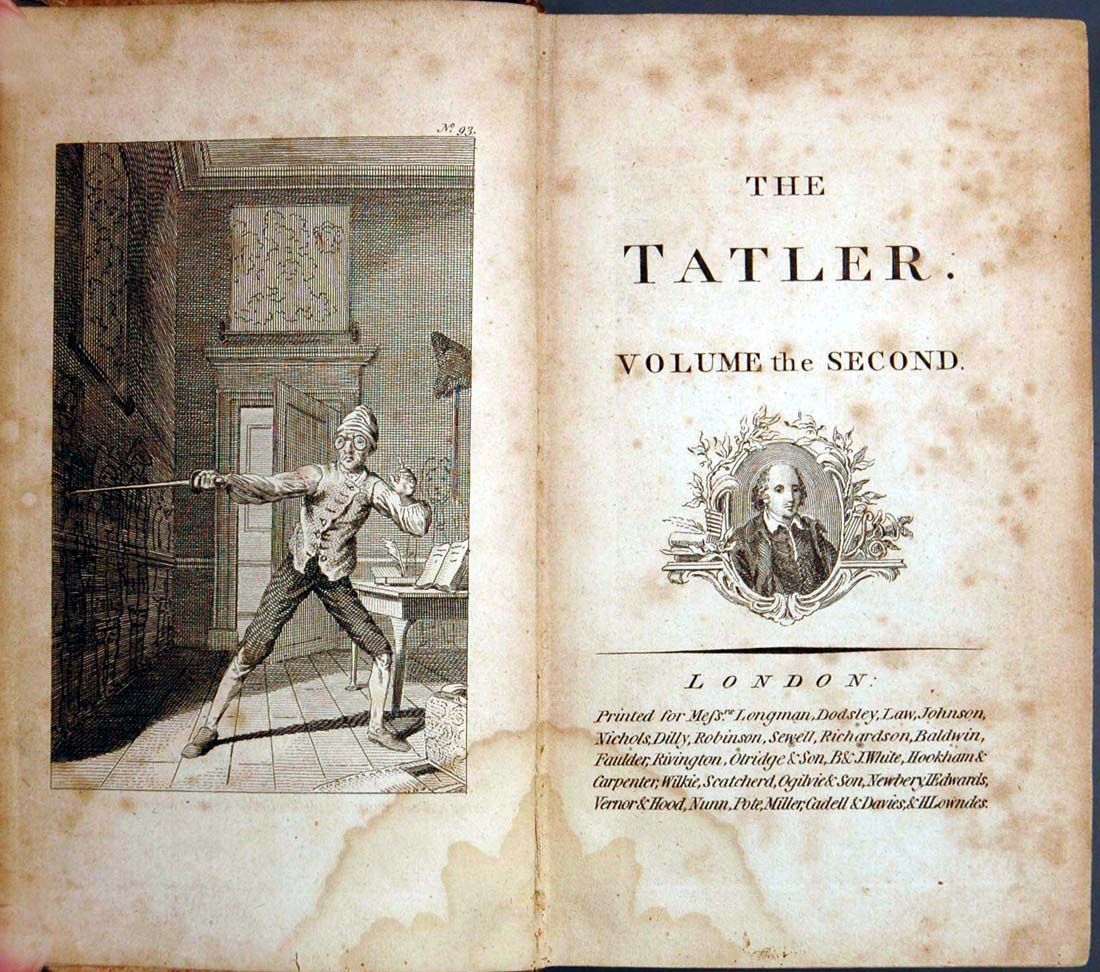
The missed connection followed within fifteen years. In 1709, The Tatler carried what the historian Francesca Beauman identifies as the earliest known "once seen" advertisement. It was placed by a Samuel Reeves:
"A gentleman who, on the twentieth instant, had the honour to conduct a lady out of boat at Whitehall Stairs, desires to know where he may wait on her to disclose a matter of concern."1
Beauman later found a marriage record under the same name a year afterward. There is no way to know whether it was the lady from the boat.2
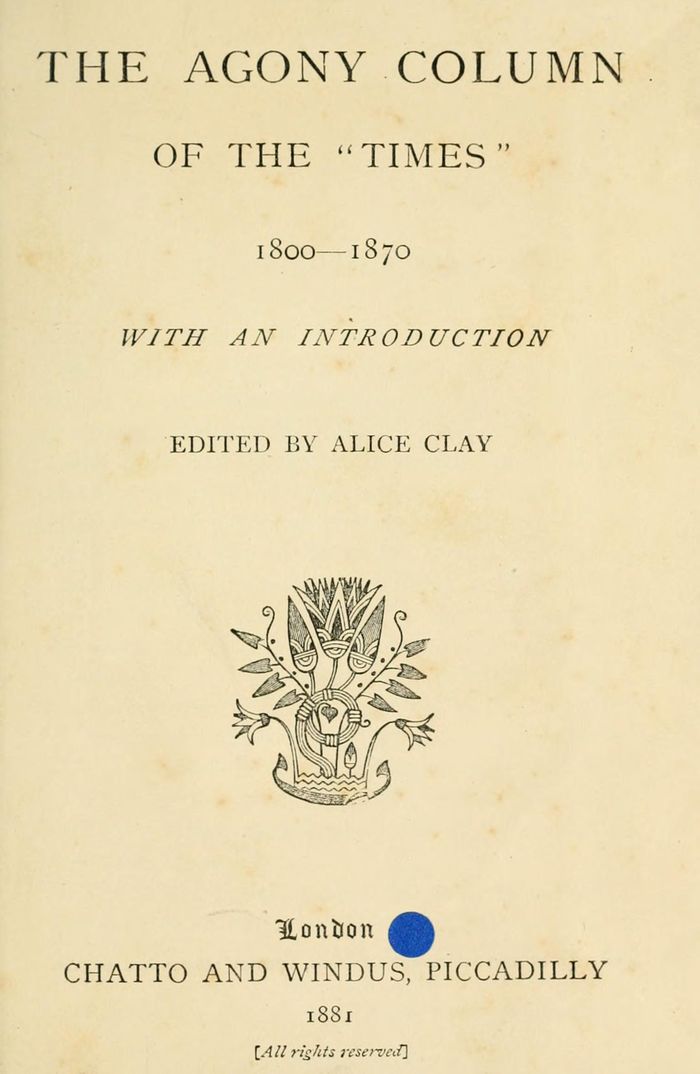
The agony column
By the early 1800s, the place for such notices was the second column of The Times of London, known as the "agony column": a running public noticeboard of lost relatives, coded messages between lovers, and appeals to strangers.3 Many were written in simple ciphers, and the column went on to shape detective fiction, Sherlock Holmes included.4
Among them are missed connections that would not look out of place today. On 25 December 1810, The Times printed:
"A LADY who passed a Gentleman on Monday, the 17th of this month, in Hart-street, Bloomsbury, about 3 o'clock in the afternoon, without speaking to him, is anxious for an opportunity of seeing him again, any time after the 7th of January."3
The following September, a woman asked the gentleman who had walked her through the City of London to wait "at the exact spot where he waited for her, at 8 o'clock on Wednesday and Thursday next." On 15 November 1855, a notice was addressed simply "TO STRANGER (W. R.)": "Met at the Adelphi, October 11; present also at Trinity Church, October 16."3
When Alice Clay collected the column's best notices in 1881, she drew one conclusion from them: "love at first sight was not so rare in those days as it is supposed to be in the present unromantic age."3
Front-page longing in New York
In the United States, Philadelphia's Public Ledger became the first paper to run personal ads regularly, in 1836.1 But the American home of the form was the New York Herald, then the most widely read newspaper in the country. Its "Personal" column moved permanently to the front page by 1867 and stayed there into the 20th century.5
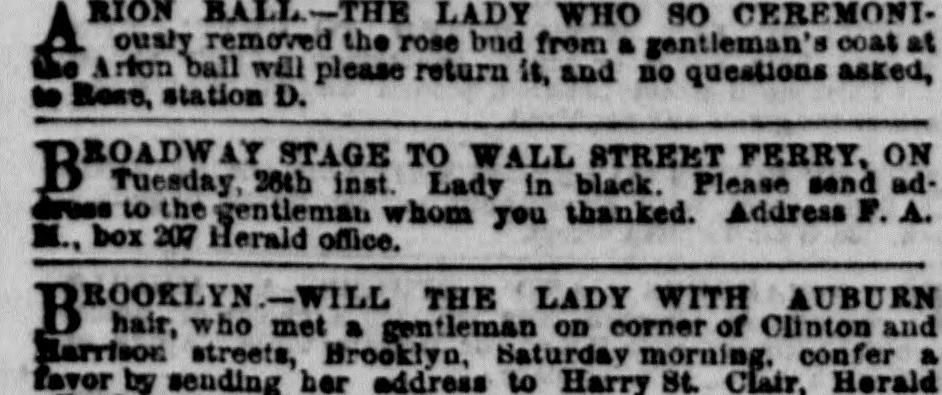
The front page of 29 March 1867 opens with notices like these:
"BROADWAY STAGE TO WALL STREET FERRY, ON Tuesday, 26th inst. Lady in black. Please send address to the gentleman whom you thanked. Address F. A. M., box 207 Herald office."
"BROOKLYN.—WILL THE LADY WITH AUBURN hair, who met a gentleman on corner of Clinton and Harrison streets, Brooklyn, Saturday morning, confer a favor by sending her address to Harry St. Clair, Herald office?"6
The "stage" was a horse-drawn omnibus. Swap it for a subway car and the ad could run tomorrow.
"I Saw U": the alt-weekly era
Personal ads faded from mainstream newspapers in the first half of the 20th century, then returned with the counterculture. The Village Voice in New York began running personals in the 1960s.1 Free alternative weeklies followed in city after city, and many gave missed connections a column of their own.
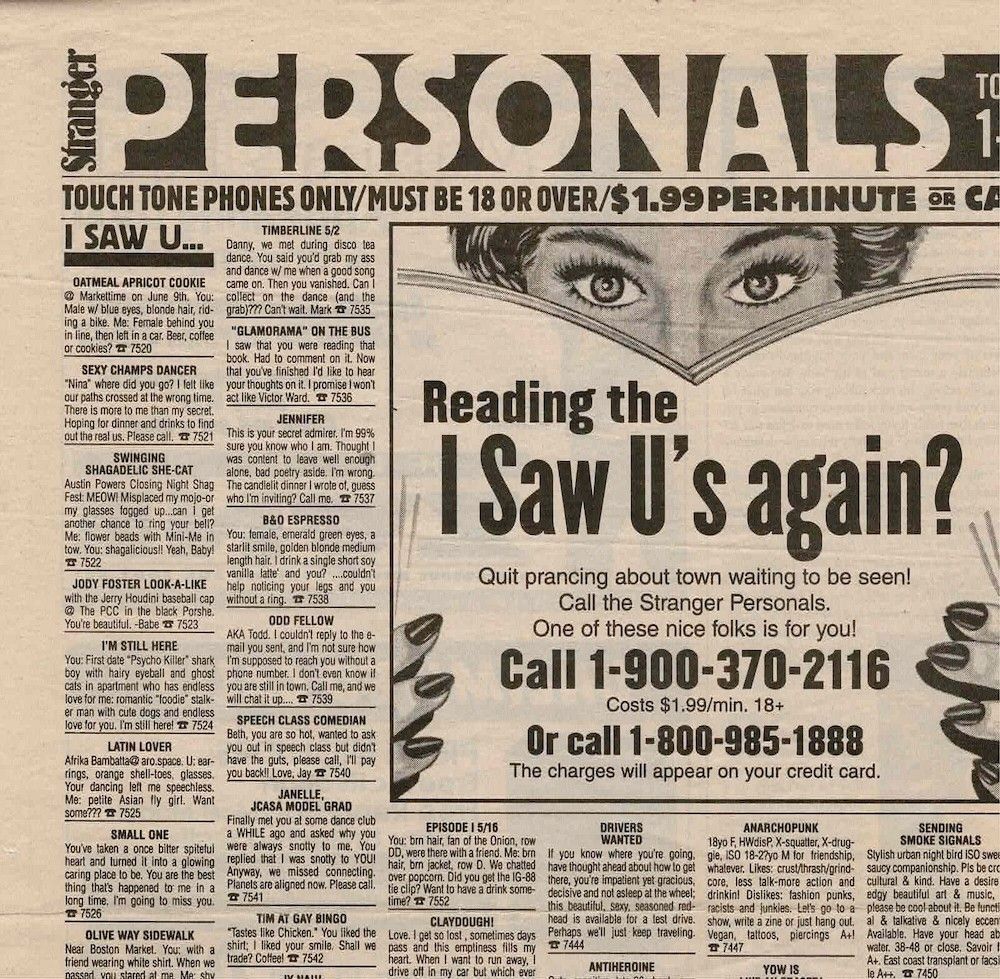
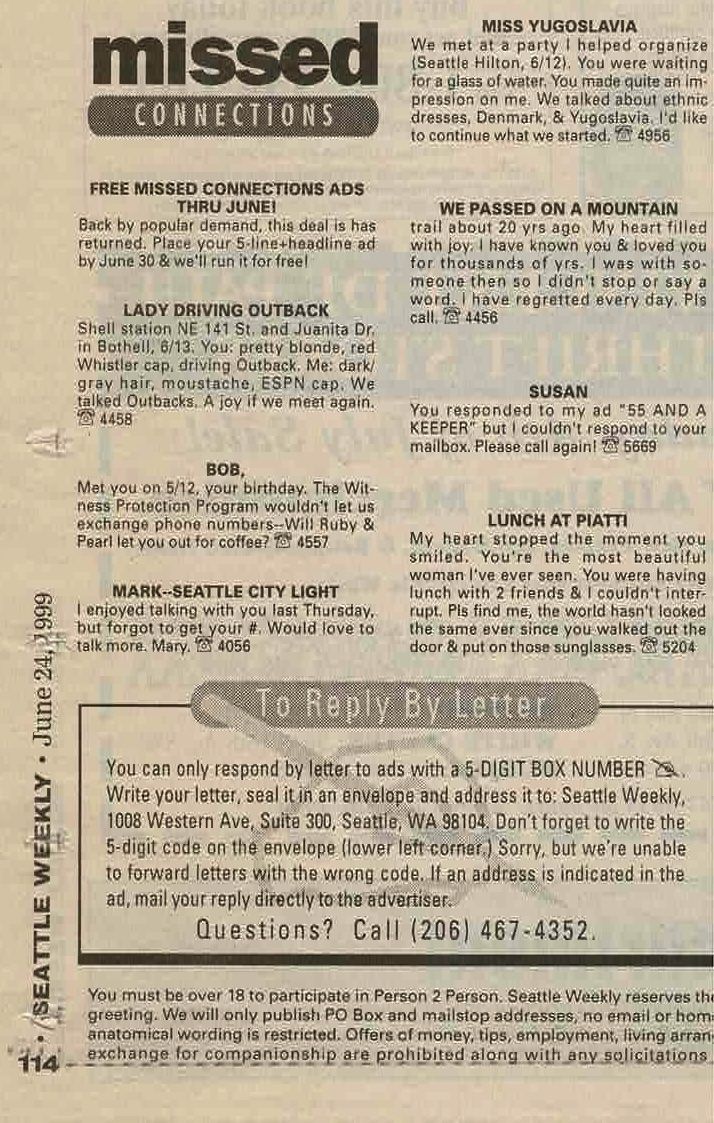
In Seattle, The Stranger ran "I Saw U." By April 1994 it was well known enough that local band The Presidents of the United States of America put a song called "Stranger," inspired by the column, on their debut album.7 Its rival, the Seattle Weekly, ran the same kind of ads under a heading that would soon become the standard name for the form. On 24 June 1999 its page read "missed connections."
The format of the era is visible in the ads themselves. Replies went through the paper: by letter to a numbered box, or by phone, at $1.99 a minute on a 900 line.
Moving online
Online services picked up the form in the late 1990s. AOL's local service Digital City, a joint venture with the Tribune Company that covered 32 cities by 1998, ran an "I Saw You" board "where people could type about missed local connections in hopes that person would read their appeal," according to Rick Robinson, one of its founding editors. "Many did," he wrote.8
Craigslist added its own Missed Connections section in the early 2000s. Its chief executive, Jim Buckmaster, had noticed a recurring kind of post in the personals, which he called "you-smiled-at-me-on-the-subway-platform."9 The section became one of the most read corners of the site, drawing thousands of ads a month in New York, San Francisco and Seattle.9
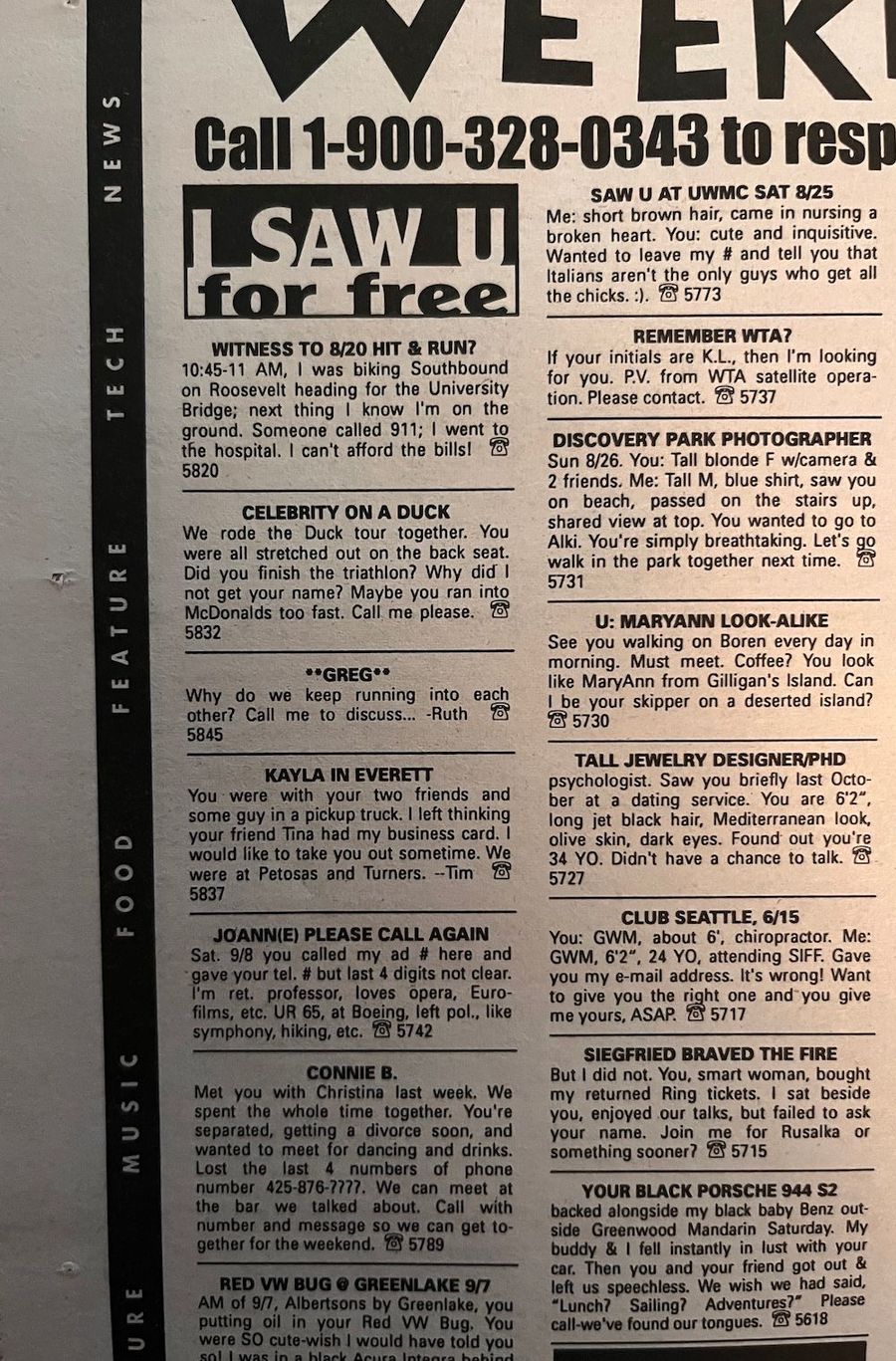
Print kept up. In 2001 the Seattle Weekly was running "I SAW U for free." London's free daily Metro gave commuters "Rush Hour Crush," which led to at least one marriage proposal.10
From ads to art
By the late 2000s the missed connection had become a genre of its own. In 2009 the cartoonist Julia Wertz edited I Saw You…, an anthology in which nearly a hundred artists drew comics from real missed-connection ads on Craigslist and in local papers.11 That December, DreamWorks bought a film pitch based on the book, with George Tillman Jr. attached to direct. The film was never made.12 In 2011 the illustrator Sophie Blackall published Missed Connections: Love, Lost & Found, painting real Craigslist posts in ink and watercolor.13
Shut down, and back again
On 22 March 2018, days after Congress passed the anti-trafficking law known as FOSTA, Craigslist took its entire personals section offline, Missed Connections included. The company said it could not take on the legal risk "without jeopardizing all our other services."14 Nearly two decades of the internet's best-known missed-connections board disappeared overnight.
The form did not. In July 2025, The Guardian reported that missed-connection posts were making a comeback on TikTok, Instagram and Reddit, where a location tag can put a post in front of the right neighborhood.15 The medium is new again, and the message is the same one printed in The Tatler in 1709: I saw you, and I'd like to see you again.
iSawYou, online since 1999, is one of the places carrying it forward.
Sources
- Francesca Beauman, Shapely Ankle Preferr'd: A History of the Lonely Hearts Ad 1695–2010 (Vintage, 2012).
- Francesca Beauman, quoted in The Guardian, July 2025 (see 15).
- Alice Clay, ed., The Agony Column of the "Times" 1800–1870 (London: Chatto and Windus, 1881). Read it free at Project Gutenberg.
- "How encrypted Victorian newspaper personal ads shaped fiction like Sherlock and Enola Holmes," The Conversation, 2023.
- Pamela Ilyse Epstein, Selling Love: The Commercialization of Intimacy in America, 1860s–1900s (PhD dissertation, Rutgers University, 2010).
- New York Herald, 29 March 1867, page 1. Library of Congress, Chronicling America.
- "The Stranger Timeline," The Stranger, 28 February 2002.
- Rick Robinson, "Tomorrowland: How AOL's Digital City Foreshadowed More Than the Future of Local," Street Fight, 5 June 2015; "America Online starts Digital City New York," CNN, 30 January 1998.
- Jennifer Lee, "Romance Beckons (in Case You Missed It)," The New York Times, 23 February 2005; Alan Feuer, "You-Caught-My-Eyes as Creative Kindling," The New York Times, 5 February 2010.
- "Metro's Rush-Hour Crush sparks marriage proposal," Metro, 19 April 2013.
- Julia Wertz, ed., I Saw You…: Comics Inspired by Real-Life Missed Connections (Three Rivers Press, 2009).
- "DreamWorks nabs 'I Saw You' pitch," The Hollywood Reporter, December 2009.
- "This Valentine's Day, A Sweet Look At Almost-Love," NPR, 13 February 2011.
- "Craigslist Shuts Down Personals Section After Congress Passes Bill On Trafficking," NPR, 23 March 2018.
- "'I was nervous to ask for your socials': why missed connection posts are making a comeback," The Guardian, July 2025.